Robots move in as waste firms struggle to find staff
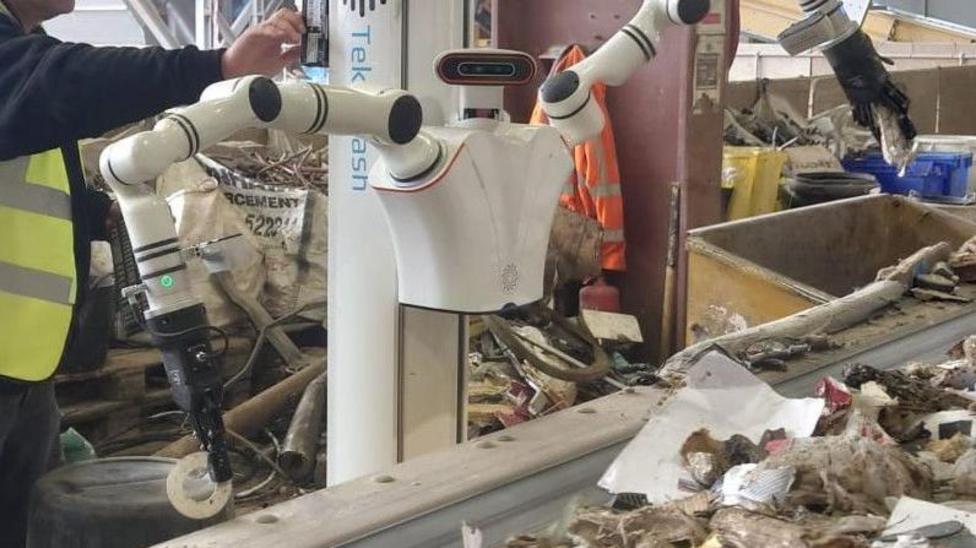
Humanoid robots are being added to the automation of waste sorting.
Editorial perspective
AI-assisted
The waste management industry faces a critical labor shortage at precisely the moment when recycling targets are tightening and municipal contracts demand higher sorting accuracy. Traditional automation has long handled bulk separation, but contamination rates remain stubbornly high—often exceeding 25%—which depresses commodity recovery values and threatens facility economics.
Humanoid robots represent a meaningful shift because they can navigate existing infrastructure designed for human workers, eliminating costly facility retrofits. More importantly, they can perform complex object recognition and delicate sorting tasks that conventional conveyor systems cannot, potentially improving material purity and boosting recovered commodity prices. For waste management operators, this addresses both immediate staffing gaps and longer-term margin pressure.
Investors should note that major waste companies have increasingly characterized labor availability as a constraint on contract bidding and operational efficiency. If robotics deployment scales successfully, it could materially improve returns on capital in a traditionally low-margin sector while reducing exposure to wage inflation.
Editorial perspective
AI-assistedThe waste management industry faces a critical labor shortage at precisely the moment when recycling targets are tightening and municipal contracts demand higher sorting accuracy. Traditional automation has long handled bulk separation, but contamination rates remain stubbornly high—often exceeding 25%—which depresses commodity recovery values and threatens facility economics.
Humanoid robots represent a meaningful shift because they can navigate existing infrastructure designed for human workers, eliminating costly facility retrofits. More importantly, they can perform complex object recognition and delicate sorting tasks that conventional conveyor systems cannot, potentially improving material purity and boosting recovered commodity prices. For waste management operators, this addresses both immediate staffing gaps and longer-term margin pressure.
Investors should note that major waste companies have increasingly characterized labor availability as a constraint on contract bidding and operational efficiency. If robotics deployment scales successfully, it could materially improve returns on capital in a traditionally low-margin sector while reducing exposure to wage inflation.